
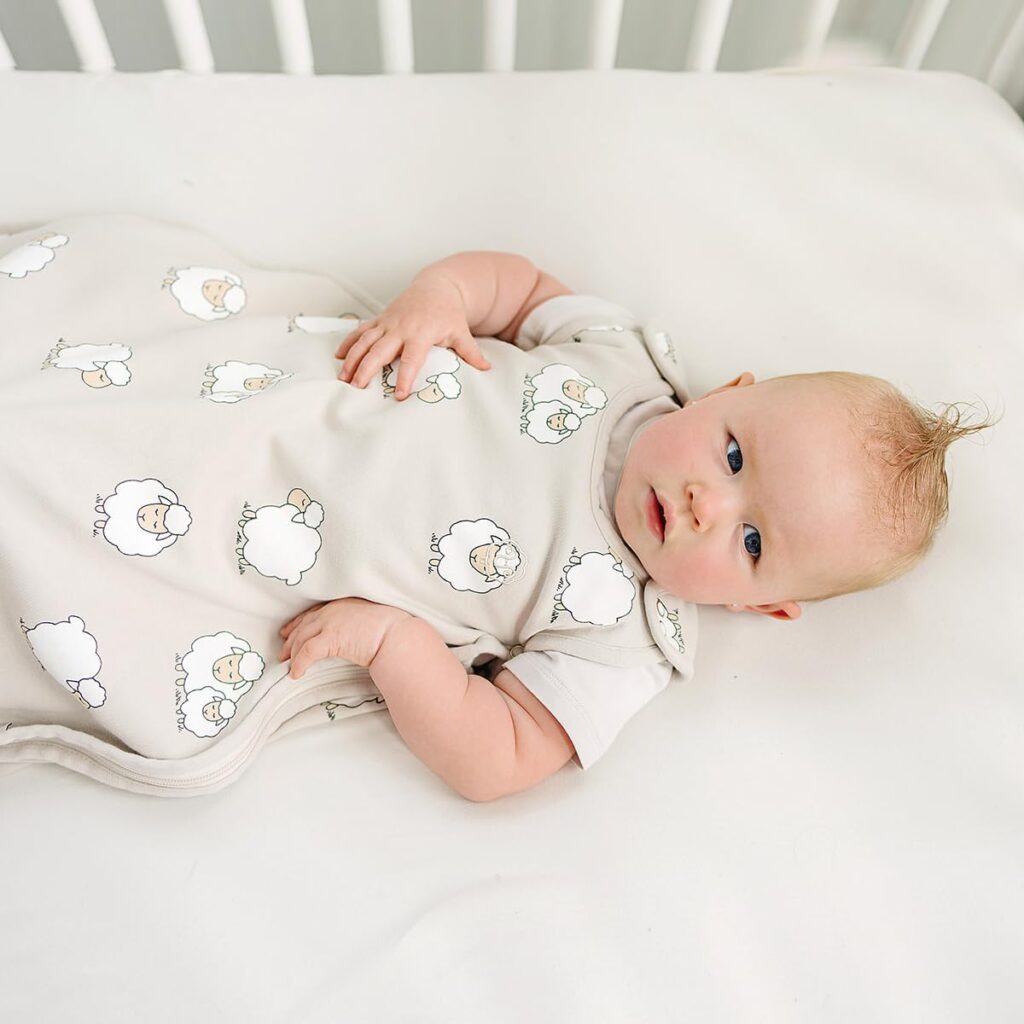
Introduction: The Midnight Thermometer Struggle
We’ve all been there. It’s called the “Midnight Thermometer Struggle,” and honestly, it’s a total sanity-killer.
Here’s the thing: A cold baby cries, but a hot baby sleeps (dangerously). That’s where the TOG guide comes in. It sounds like some complicated tech spec, but it’s actually just a simple way to help you stop overthinking and finally get some shut-eye.
In this guide, I’m breaking down the mystery of TOG ratings so you can stop being a human thermostat and start being a rested parent again.
The TOG Headache (The Short Version)
Most brands will try to sell you a whole “closet” of sleep sacks:
- 0.5 TOG: Basically a thin sheet for those heatwave nights.
- 1.0 TOG: The “Goldilocks” layer for spring or fall.
- 2.5 TOG: The heavy-duty puffer jacket version for freezing winters.
The "Cheat Code" – Why Woolino is a Total No-Brainer
Enter the Woolino 4-Season Sleep Sack. I know what you’re thinking: “How can one sack work for all four seasons? Is it magic?” Kind of. It’s actually Merino wool. Unlike synthetic fleece or even basic cotton, Merino wool is a literal freak of nature. It’s a “breathable” fiber that actually regulates temperature.
- When it’s cold, it traps heat to keep your baby warm.
- When it’s warm, it wicks away moisture and keeps them cool.
It’s like having a tiny, high-tech thermostat built right into their pajamas.
Read our in-depth Woolino 4-Season Sleep Sack review to see why it tops our list
Why this is a game-changer for your sanity:
- One-and-Done: You buy one (admittedly, it’s an investment) and you’re set. No more panic-buying a 2.5 TOG sack because a cold front is coming.
- The “Safety” Peace of Mind: Because it regulates temp so well, the risk of your baby waking up sweaty and overheated (which is every parent’s biggest fear) drops way down.
- The Sleep Longevity: Merino stays cozy longer. And we all know the golden rule: A cozy baby is a sleeping baby.
If you’re over the TOG guessing game, this is the exit ramp. It’s the only sleep sack you’ll actually need until they’re ready for a big-kid bed.
The Art of Layering
If the room temperature fluctuates significantly throughout the night, you’ll need to make subtle adjustments to their base layers. Here’s a comprehensive rule of thumb:
- Warm Nights (75°F+): A short-sleeved cotton onesie is usually sufficient.
- Moderate Nights (68-72°F): Opt for long-sleeved pajamas made of breathable fibers.
- Chilly Nights (Under 68°F): This is where versatile layering becomes indispensable. You might consider a long-sleeved onesie underneath their footie pajamas to alleviate the chill.
Ultimately, the goal is to maintain a consistent core temperature without compromising safety.
The "S" Word – Safety and Overheating
How can you tell if your baby is too hot? Don’t rely on their hands or feet, as their circulation is still developing. Instead, be vigilant for these indicators:
- A damp chest or neck: This indicates they are sweating to compensate for the heat.
- Flushed cheeks: A clear sign that their body is struggling to dissipate heat.
- Rapid breathing: If they look like they’ve just finished a marathon, they are likely over-bundled.
In essence, it’s always better for a baby to be slightly cool than dangerously warm.
Cotton vs. Bamboo vs. Merino
When navigating the intricate world of sleep gear, the choice of fabric is as pivotal as the TOG rating itself. While cotton is the conventional choice, many parents are now gravitating towards bamboo or merino wool.
- Cotton: It’s affordable and ubiquitous, but it lacks moisture-wicking properties. If your baby sweats, cotton stays damp, which can lead to a chilling effect.
- Bamboo: Known for its exquisite softness, bamboo is a popular choice for sensitive skin. However, it often requires delicate handling during laundry, which might be a deterrent for busy parents.
- Merino Wool (The Woolino Standard): This is the pinnacle of sleep technology. It’s not just about warmth; it’s about thermal regulation. By creating a micro-climate around the body, it obviates the need for multiple TOG-rated sacks.
How to Wash Your Sleep Sack
Conclusion: Your Roadmap to Restored Sanity
In summary, choosing the right sleep gear is the culmination of your efforts to create a safe, stable environment for your little one. While the technicalities of TOG ratings might seem perplexing initially, they are merely tools to help you mitigate sleep-related anxieties.
Whether you opt for a versatile Merino wool sack or a collection of cotton layers, the ultimate goal remains constant: a restful night for your baby and the restoration of your own sanity. Don’t let the “Midnight Thermometer Struggle” diminish the joy of these early years. By making an informed decision today, you’re not just buying a piece of fabric—you’re investing in the peaceful, uninterrupted sleep you so rightly deserve.
“Exhausted by the constant calculations? If managing a closet full of different TOG-rated sacks feels like a superfluous burden, there is a simpler way. Our comprehensive [Woolino 4-Season Sleep Sack Review] explores how one versatile piece of gear can obviate the need for the ‘Midnight Thermometer Struggle’ once and for all.”
FAQ
1. What is the most versatile TOG rating for year-round use?
For most parents, a 1.0 TOG sleep sack is considered the "Goldilocks" option. It is sufficient for room temperatures between 68-74°F. However, if you want to obviate the need for multiple sacks, a Merino wool option (like the Woolino 4-season) is indispensable as it naturally regulates temperature across all seasons.
2. When should I transition from a swaddle to a baby sleep sack?
The transition is imperative as soon as your baby exhibits signs of rolling. This is a fundamental safety requirement to prevent asphyxiation, as babies need their arms free to reposition themselves if they flip onto their tummies.
3. Are weighted baby sleep sacks safe for my infant?
This is a contentious topic. While some brands promote weighted baby sacks for better sleep, many pediatric authorities, including the AAP, advise against them. The extra weight may impede a baby's ability to chest-breathe or wake up when needed, potentially compromising their safety.
4. How many sleep sacks do I actually need to own?
A pragmatic approach is the "Rule of Three": one in use, one in the wash, and one ready for unforeseen midnight accidents. Owning at least three ensures your routine remains harmonious even during laundry delays.
5. Can I use a blanket on top of a baby sleep sack?
No. Using a blanket in a crib is strictly prohibited by modern safety standards until the baby is at least 12 months old. A sleep sack is specifically designed to be a standalone solution, providing warmth without the risk of loose bedding obstructing the baby's airway.
6. Is it normal for my baby's hands to feel cold in a sleep sack?
Yes, and it is rarely a cause for consternation. Babies have immature circulatory systems, meaning their extremities are often cooler than their core. To ascertain their true temperature, always feel their chest or the nape of their neck.
7. How should I dress my baby under a 2.5 TOG winter sack?
In colder climates (below 68°F), a comprehensive layering strategy involves pairing a 2.5 TOG sack with long-sleeved cotton pajamas. If the temperature drops further, adding a short-sleeved onesie underneath can provide supplementary insulation.
8. Does the Woolino 4-season sleep sack really work in summer?
It sounds counterintuitive, but yes. Because Merino wool is highly breathable and moisture-wicking, it helps dissipate excess body heat, keeping your baby dry and comfortable even when the ambient temperature rises.